
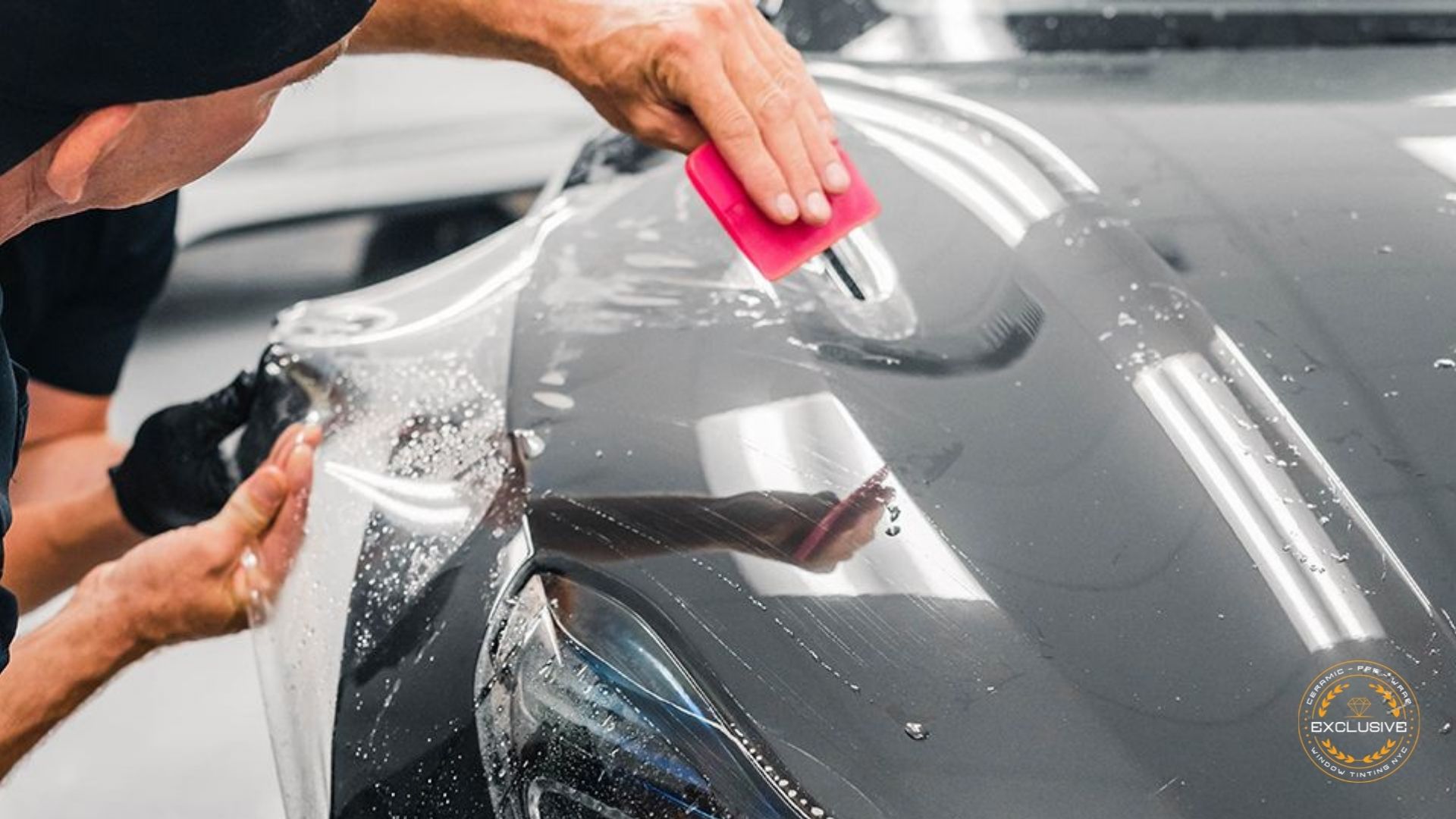
If you drive in New York City, you already know it’s not a gentle environment for a car’s exterior. Between tight streets, double-parked cars, delivery trucks squeezing into impossible spaces, and nonstop stop-and-go traffic, your paint is constantly exposed to risk, even when you’re a careful driver.
One day it’s debris flying off the FDR. The next it’s a surprise pothole on Queens Boulevard kicking up grit into the air. And if you street park regularly, you’re always one careless door swing away from scratches that were never your fault.
That’s exactly why paint protection film has become one of the smartest upgrades NYC drivers can make. We often describe it as the invisible shield your vehicle needs in a city where your car is always surrounded by motion, friction, and unpredictability.
In this guide, we’re going to break down what paint protection film really is, what it protects against in NYC specifically, the areas that matter most, and why PPF installation quality is the difference between a clean, seamless result and a film job that fails early.
What Exactly Is Paint Protection Film (And What It’s Made For)
Paint protection film is a clear urethane film applied to the painted exterior of your vehicle to protect it from physical damage. It’s designed to absorb impact, resist abrasion, and reduce wear that would normally go straight into your clear coat.
In other words, it protects the paint you already paid for, and helps keep the vehicle looking newer for longer without changing the original finish. When it’s installed properly, it’s nearly invisible, which is why it’s become so popular in places like NYC where paint damage is constant.
Modern paint protection film is also much more advanced than what people remember from older clear bra products. Today’s films are clearer, glossier, and often feature a self-healing top coat that helps reduce the appearance of light swirls and micro-scratches with heat.
You’ll hear different terms used for the same product:
- PPF
- Clear bra
- Protection film
- Paint protection film
No matter what someone calls it, the goal is the same: add a durable barrier between your paint and the daily chaos of NYC driving.
What Paint Protection Film Protects Against in NYC (The Real Threats)
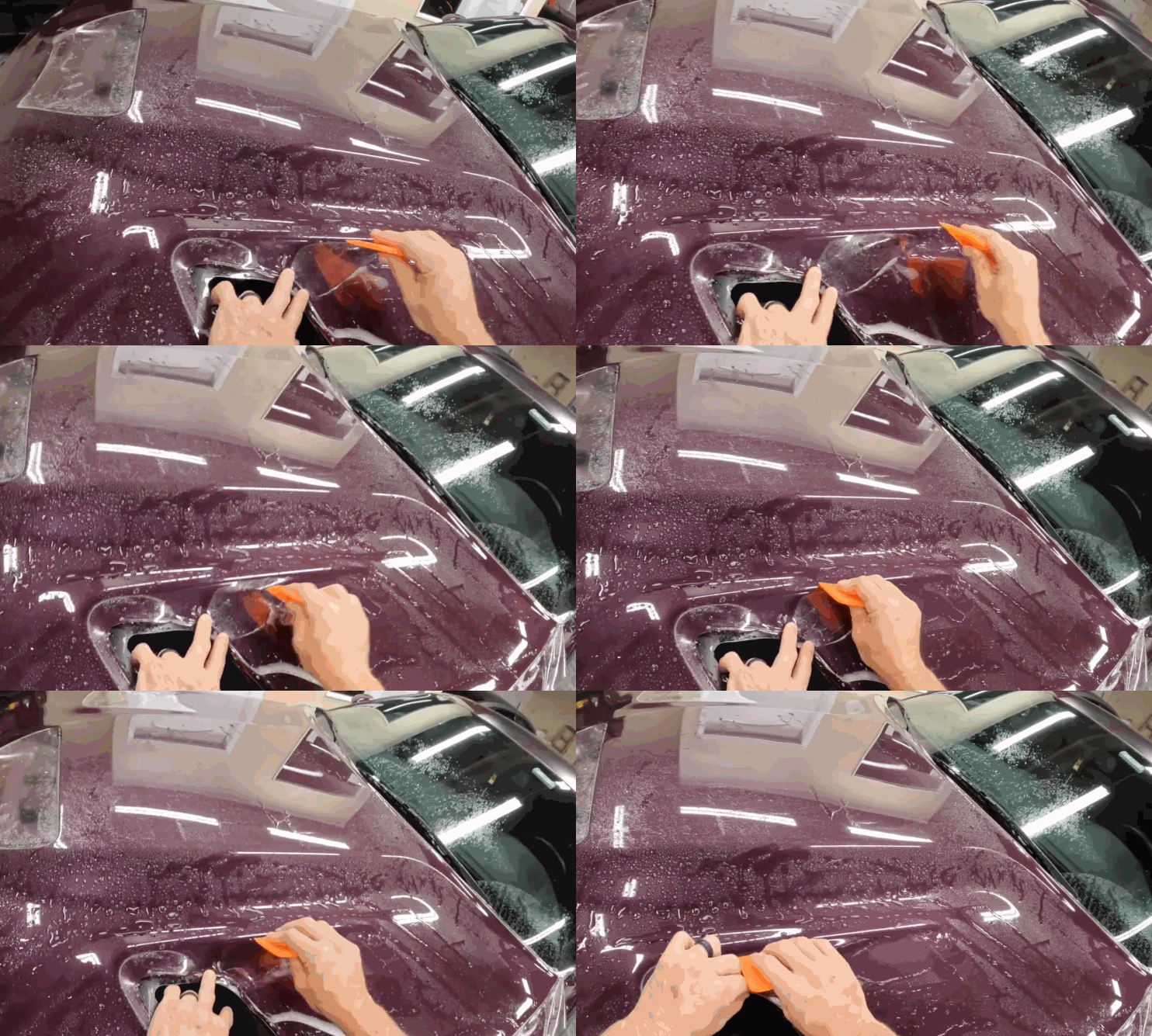
NYC is one of those places where your vehicle can take paint damage without anything dramatic happening. Most paint wear here isn’t one big event, it’s hundreds of small daily impacts that add up, especially if you commute, street park, or cross bridges and tunnels regularly.
We see paint getting hammered by road grit, city dust, construction zones, tight parking situations, and seasonal road treatments. It’s the kind of environment where even a newer car can start showing wear quickly, especially on high-impact areas like the front bumper and hood.
Here are the most common NYC threats that paint protection film is built to reduce:
- Road debris and highway grit
- Rock chips on the front end
- Construction debris from constant road work
- Winter grime and winter road salt
- Scratch resistance issues from tight parking contact
- Scuffs from garage ramps and narrow entry lanes
The key thing NYC drivers should understand is that PPF isn’t about being paranoid, it’s about being realistic. In this city, protecting your paint is less about “if” damage happens, and more about how much you can prevent before it builds up.
The Areas NYC Cars Should Protect First (Most Popular Coverage Options)
Most drivers assume paint protection film has to be full coverage to make sense, but that’s not true. In NYC, many vehicles get the best value by protecting the zones that take the most abuse, especially if the car spends time on highways, bridges, tunnels, or street parking lanes.
Coverage can be tailored to how you actually drive and park in the city. Some drivers start with partial front coverage as a high-impact option that targets the areas most likely to take rock chips and road debris. Others prefer full front protection because it offers the best balance between protection and overall value, especially for daily commuters and frequent bridge or tunnel drivers.
For owners who want maximum protection and the most consistent long-term finish, full-body PPF is the strongest option, particularly in a city where contact and friction are common. And even if you don’t want full coverage, targeted protection for rocker panels, door edges, and the trunk ledge can make a huge difference in preventing the kind of everyday wear that’s hard to avoid in NYC.
NYC conditions influence this a lot because damage doesn’t only happen at speed. Parking friction, curbside contact, and tight garages can cause just as much wear as highway debris, so protecting the right areas first is often the smartest move.
Why Professional PPF Installation Matters More Than the Film Itself
This is where we get very direct: the film matters, but PPF installation matters more than most people realize.
A premium film installed poorly can still lift, bubble, or look uneven. On the other hand, a properly executed PPF installation can make the film look factory clean, protect better, and last longer. In a city like NYC, where edges get tested constantly by grime, contact, and frequent washing, quality installation makes a noticeable difference.
A proper PPF installation should include:
- Surface prep and decontamination before film touches paint
- Clean environment standards to reduce contamination
- Accurate alignment to avoid tension and early edge lifting
- Edge finishing with stable corners and clean lines
- Inspection and correction before delivery
In simple terms: the film doesn’t protect your car by itself. The install is what turns the material into a true “invisible shield.” That’s why we treat PPF like a craft, not a quick add-on, because in NYC, every edge and seam gets tested fast.
Paint Protection Film vs Ceramic Coating: What NYC Drivers Should Know
This is one of the most common questions we get in NYC, and it makes sense because both options are marketed as “paint protection.” But they don’t protect your vehicle in the same way at all.
Paint protection film (PPF) is your physical armor. It’s designed to take hits: rock chips, debris, tight parking scuffs, and impact in high-risk zones. Ceramic coating, on the other hand, is more like a performance layer for your paint: it enhances gloss, makes washing easier, improves water behavior, and adds chemical resistance against grime and environmental contamination.
In NYC terms, think of it like this: ceramic coating helps your car stay cleaner in a city that makes cars dirty instantly. But it won’t stop a rock chip on the FDR or a scrape from an aggressive parking situation in Midtown.
Here’s the clearest way to compare them:
- PPF stops physical damage
- Ceramic coating helps cleaning and adds chemical resistance
- PPF is stronger in high-impact areas
- Ceramic coating boosts shine and reduces maintenance effort
- The best paint protection options often combine both
And yes, they work extremely well together. The best order is PPF first, then ceramic coating over PPF for easier maintenance and more consistent long-term protection. That combo is especially valuable in NYC where road grime, salt, and constant washing can slowly wear down unprotected paint.
At the end of the day, it’s not about what’s “better,” it’s about what’s realistic for how you actually drive and park in New York.

NYC Vehicle Ownership Value: How PPF Helps Long-Term
NYC is rough on vehicles, not because people don’t care, but because the environment doesn’t allow paint to stay perfect without real protection. Between street parking, daily grime, seasonal salt, and the constant friction of city life, cosmetic wear builds fast, even on newer cars.
This is where paint protection film becomes a long-term ownership tool, not just a luxury upgrade. When your paint stays clean and preserved, you’re spending less time correcting damage and more time just enjoying a car that continues to look sharp.
Here’s what long-term PPF ownership typically improves:
- Preserving gloss and keeping the finish looking newer
- Easier washing because grime doesn’t bite into the surface as easily
- Fewer chips and scuffs over time
- Reduced need for paint correction
- Better resale and trade-in presentation
- More confidence you’re preserving OEM paint protection
And resale value matters more than people admit, even in NYC. When you’re trading in or selling a vehicle, a front end covered in chips and sandblasting damage makes a car look older than it really is. PPF keeps your vehicle looking “well-kept,” which often translates into less negotiation pressure and fewer cosmetic deductions.
The real win is that you’re preserving your original finish. When you avoid repaints and heavy correction, you protect what buyers trust most: factory paint.
What to Expect From the PPF Installation Process (From Drop-Off to Delivery)
A lot of people assume PPF installation is basically “drop the car off and pick it up with film on it.” In reality, the quality of the result depends on the process, and in NYC, process matters more because the vehicle will immediately be exposed to harsh conditions again.
At Exclusive Window Tinting, we treat PPF installation as a precision service, not a quick add-on, because the goal is for the protection to be clean, seamless, and durable enough to hold up to real NYC driving.
Here’s what a proper install process looks like:
- Consultation and coverage selection (partial front, full front, full-body)
- Prep and decontamination (so the film bonds correctly)
- Installation and alignment (clean lines, correct fitment)
- Edge finishing and inspection (so the result stays invisible and stable)
- Curing time (varies by coverage and conditions)
Time-wise, it depends on how much coverage you choose. A partial package is obviously faster than full-body, but we always recommend planning for quality over speed. Rushing a PPF job is how you end up with lifting edges or trapped contamination.
After installation, NYC aftercare is simple but important: avoid harsh chemicals early on, don’t power wash edges up close, and wash safely to prevent unnecessary swirl marks. If you maintain it correctly, PPF can be a true long-term protection layer instead of something you’re constantly “babysitting.”
Conclusion: The Smartest Way to Protect an NYC Car Without Changing Its Look
If you drive in New York City, you don’t need a lecture about how tough the streets are. You already see it every day: road debris, construction zones, winter grime, tight parking, and constant contact risks that make paint wear almost unavoidable.
That’s exactly why paint protection film works so well here. It’s the invisible shield that protects your finish from the kind of damage NYC is known for, without changing the look of your vehicle. And when you protect the paint properly, you’re protecting more than appearance, you’re protecting long-term ownership value, and you’re preserving your original finish the way it was meant to be.
At Exclusive Window Tinting, we help NYC drivers choose realistic coverage, execute clean professional installs, and keep protection practical for real city life. If you’re ready to explore your options, reach out to our team for a quote, let’s talk coverage, and schedule your PPF installation with the confidence that it’s being done with true NYC-level precision.
- Serving in Staten Island
Mon to Fri: 9:00 AM - 7:00 PM Sat: 9:00 AM - 6:00 PM Sun: Closed